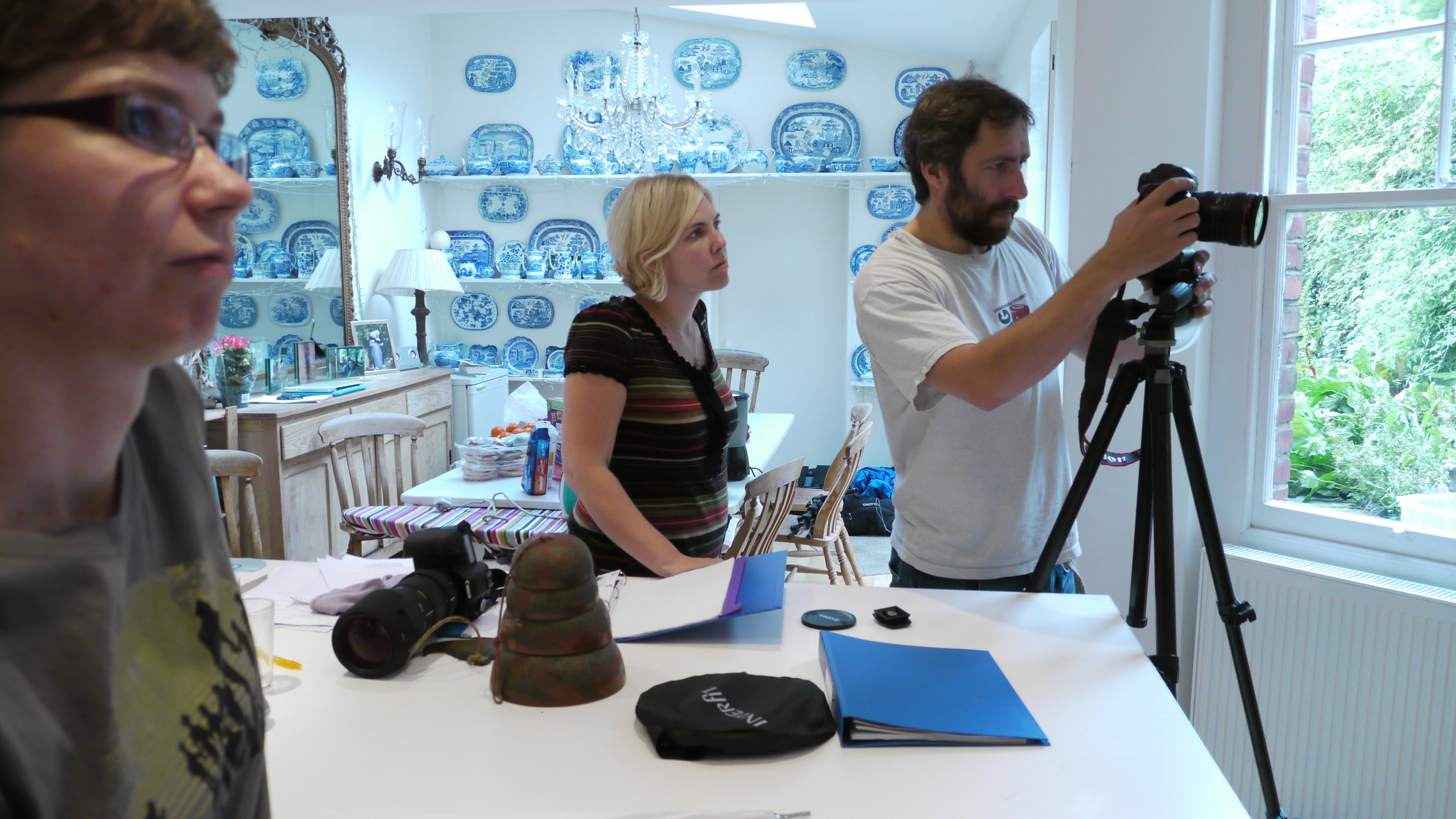
It’s been a really interesting process so far directing my own work. I’ve been on set a lot throughout my career so far in various different guises but as a director I’ve mainly self shot or worked with a small crew on documentaries.
When I had the idea for the web series we’re making right now, I knew I had to make it now and it was time for my to take the helm and make it myself. Halfway through I’ve already learned a lot so I thought I’d give a top 6 lessons list for all those thinking of embarking on this type of thing.
1) Your camera is a character, cast it well:
I never thought this before. I’ve heard it but never considered it. I thought of it more as who I would be working and not how they would flavour the feel. With documentaries, I have an amazing filmmaker I work with, Michelle Tsen, who I would trust with any shoot. She makes everything look beautiful.
For this shoot, I wanted to work with someone who had experience in comedy. I looked at lots of different showreels and it was a fast turn around – who was going to take a chance on my project and will I like working with them? As soon as I saw Ian Weir’s work, I knew I had to work with him. Though he is a primarily stills photographer, his work had humour and style and beauty. It was human. And I wanted to bring that to set and to this series.
Even though he hadn’t had a ton of experience on set as a DoP, I went with my gut and have had an amazing time on set. He is the lead character of this production. Not only are the shots looking amazing, but I know I can trust him to get the shots that will make this brilliant. That is worth it’s weight in gold.
2) Always carry cash:
Not only am I writing and directing this, I’ve also been the producer. On set, I’m directing so I can’t leave. I have to rely on other people to pick up a set of batteries or an English breakfast for a prop or a couple coffees for a very tired crew that I made get up at 5 am. Especially in a low budget production, people are there working for experience and for no money, so I’d never want to make them pay, even if I’m paying them back later. I think my other lesson is to get a great producer on board (more of that in number 3).
3) Get a great producer on board:
You can’t do it all yourself. I like to think that I can sometimes, but I can’t. Wearing different hats on set means that you can’t get always get a clear picture of everything all the time. Every day on set I’m producer, then director, then actor. There are decisions to make all the time – decisions on call times, on breaks, on what to do when it rains, how to get one last shot before the light goes, how to say a certain line, where to look when your fellow actor leaves the shot, where to put the cameras, and how to make an empty cafe look full. All those questions are in your head, and when you’re working with other people, they have questions too. On docs with small teams, it’s me, the DoP and the interviewee. Not too many questions there, but with a set full of 10 actors, and 5 crew, there’s a lot of questions. A great producer is like a conductor,and the writer, the director, the cast and crew the symphony. They can make the job a breeze and answer ALL the questions.
4) You don’t need to tell everyone, everything:
I’m a talker. I talk things out. But telling your DoP every single shot in detail in the middle of setting up something in a different location, or running through every thought of the day with your lead actress isn’t going to help them. It’s just helping me. So only tell the people who need to know something, when they need to know it so they can do your job. Your AD won’t mind hearing your babble in a corner of the set over coffee. Do the talking there.
5) Make sure you sleep:
I don’t think I’ve had more than 3 hours a night since I thought of the idea of the web series. Factor in sleep. It can save you a lot of grief in the end.
6) Understand you can’t always get it right all the time:
No matter what you do, no matter how much you prepare, and no matter how many times you go through things in your head, things can not go to plan. It happens. The shot may go wrong. You may have misssed something. You could have spent 8 shots getting your line just right but you don’t have time for 8 shots, you only have time for 2. But don’t, I repeat don’t, lose sleep over it. You can do your best, and that is the best you can do. And next time, you can do it better.
I’m sure there are a million other things that could be said, and should be remembered, but I’ll leave it with this. Your friends are invaluable. They’ll understand when you have to work on your shot list one last time or will put out a call out for a location, or some extras, or anything you need. I don’t think I could have gone this far without them.